Hilandar: The Serbian Monastery of the Holy Mountain
Set inland among wooded hills, Hilandar has been the spiritual heart of the Serbian Orthodox world for more than eight centuries — a monastery that is also, in a sense, a nation's soul kept on foreign soil.
Founded: 1198 · Dedicated to: The Presentation of the Virgin
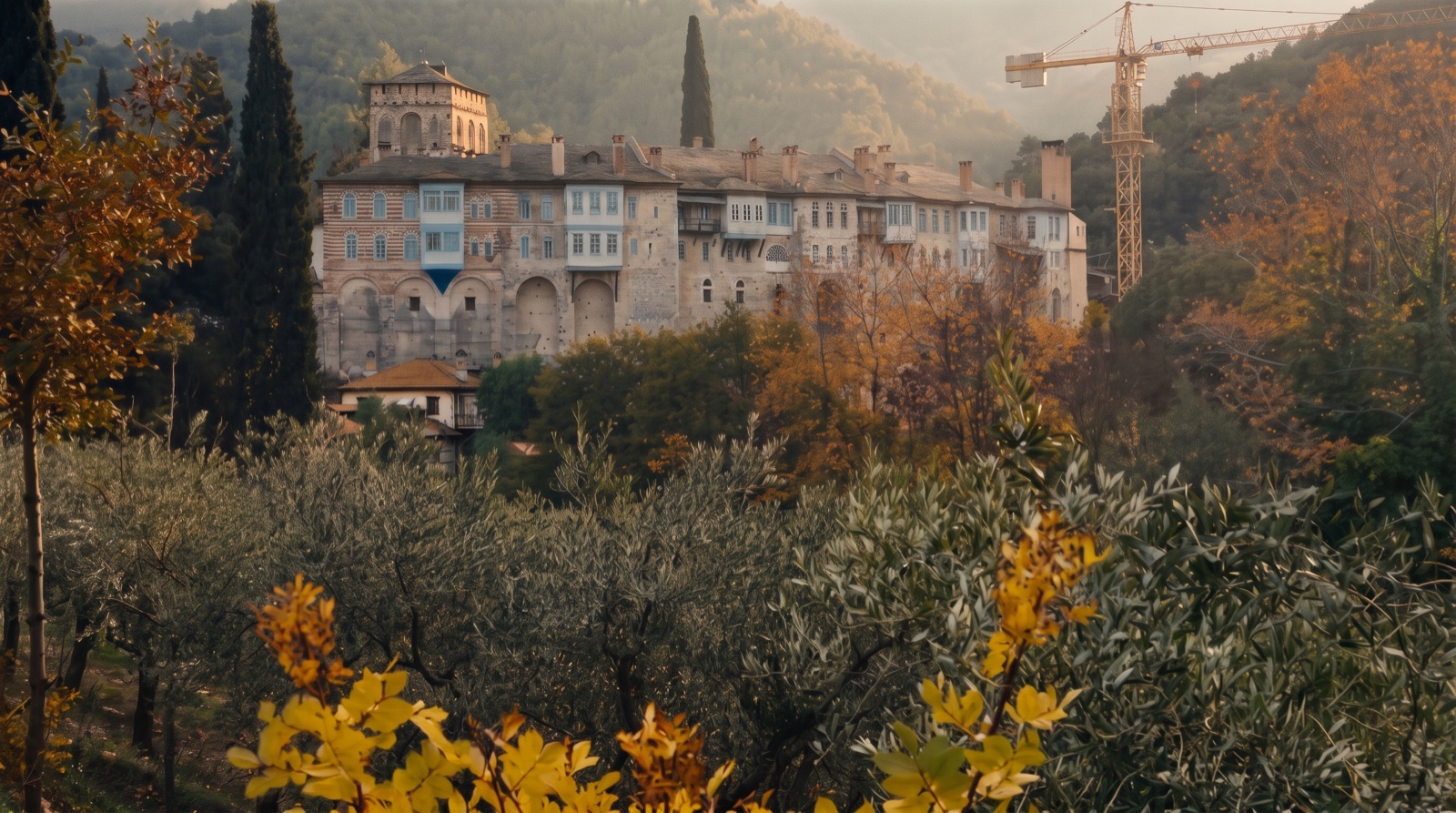
Hilandar lies in the north of the Athos peninsula, away from the sea. It was refounded in 1198 by Saint Simeon — the former Serbian ruler Stefan Nemanja, who became a monk — and his son Saint Sava, who would become the first Archbishop of the Serbs. From the start it was the great centre of Serbian monasticism.
The Three-Handed icon
Hilandar's most famous treasure is the icon of the Panagia Tricherousa — the Virgin 'of the Three Hands' — associated with Saint John of Damascus, whose severed hand, tradition says, was restored by the Virgin. The icon has a unique status: at Hilandar it is venerated as abbot of the monastery.
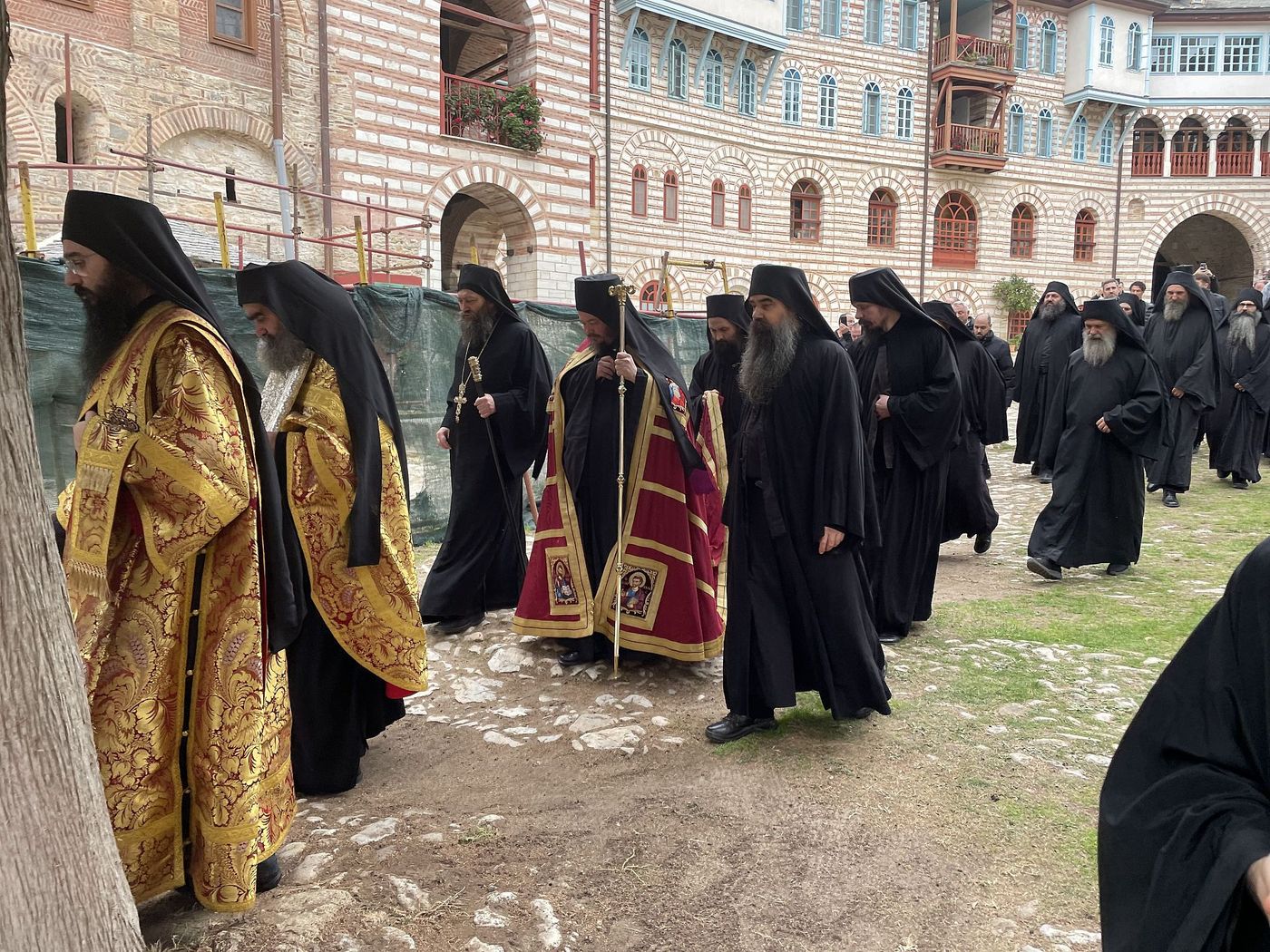
The vine of Saint Simeon
From the tomb of Saint Simeon a vine is said to have grown out of the monastery wall, and pilgrims for centuries have sought its fruit. The monastery survived a devastating fire in 2004 and has been painstakingly restored.
In the series
Hilandar is the destination of the second journey, the end point of the walk that begins at Karyes and Vatopedi.
Frequently asked questions
Why is Hilandar important to Serbs?
It was refounded in 1198 by Saints Simeon and Sava and has been the central monastery of Serbian Orthodoxy and culture for over eight centuries.
What is the Three-Handed icon?
The Panagia Tricherousa, an icon of the Virgin linked to Saint John of Damascus, venerated at Hilandar as the monastery's abbot.
Who founded Hilandar?
Saint Simeon (Stefan Nemanja) and his son Saint Sava, in 1198.