Vatopedi: The Great Monastery of the North
Spread like a small walled town above its own harbour, Vatopedi is one of the oldest, largest and most influential monasteries on Mount Athos — and home to some of Orthodoxy's most venerated treasures.
Founded: 10th century · Dedicated to: The Annunciation of the Theotokos
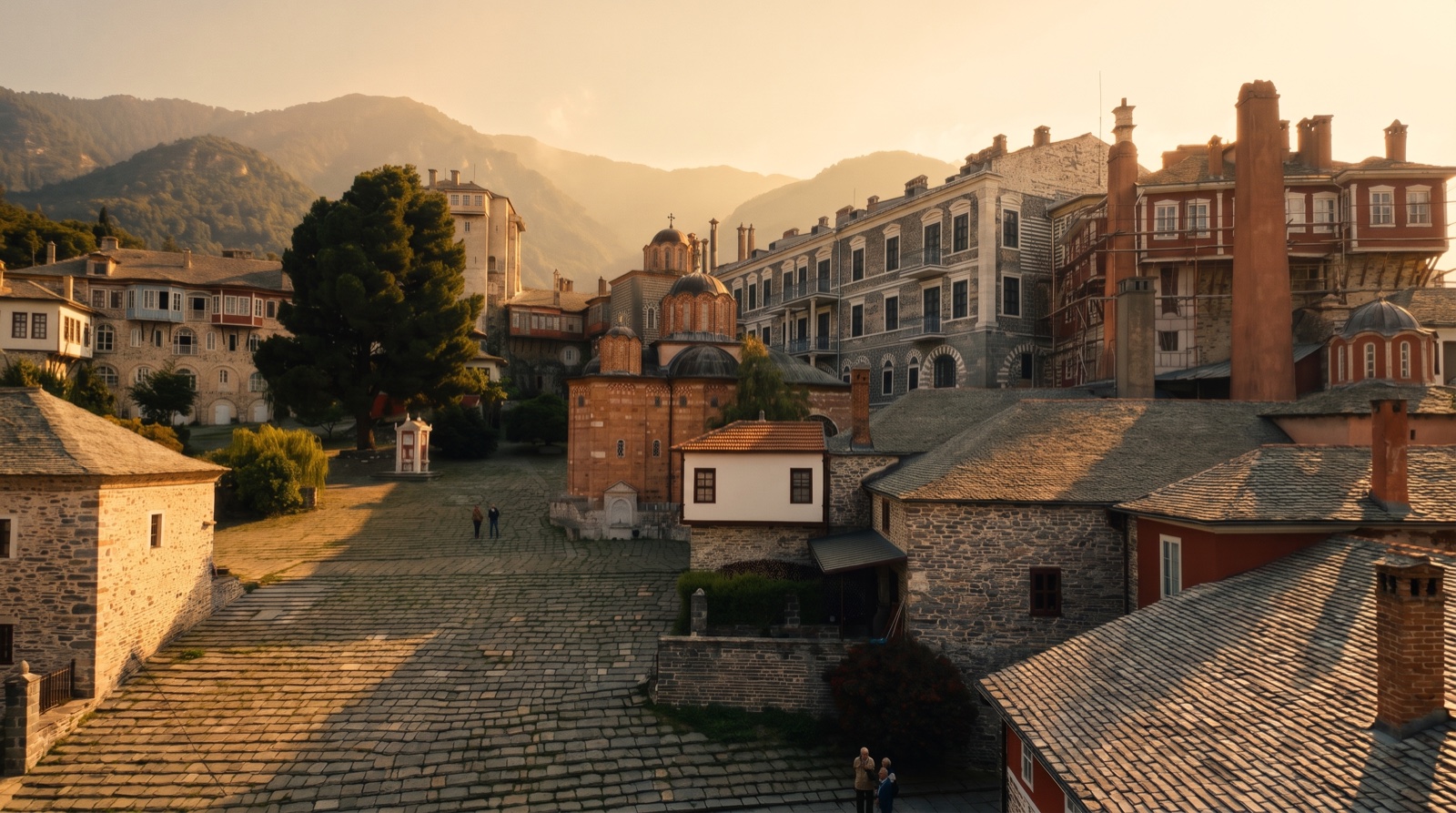
Vatopedi stands on the north-east coast of the peninsula, ranked second in the hierarchy of the twenty ruling monasteries of Athos. Founded in the late 10th century, it grew into a vast complex of churches, chapels, towers and cells arranged around a central court.
Relics and icons
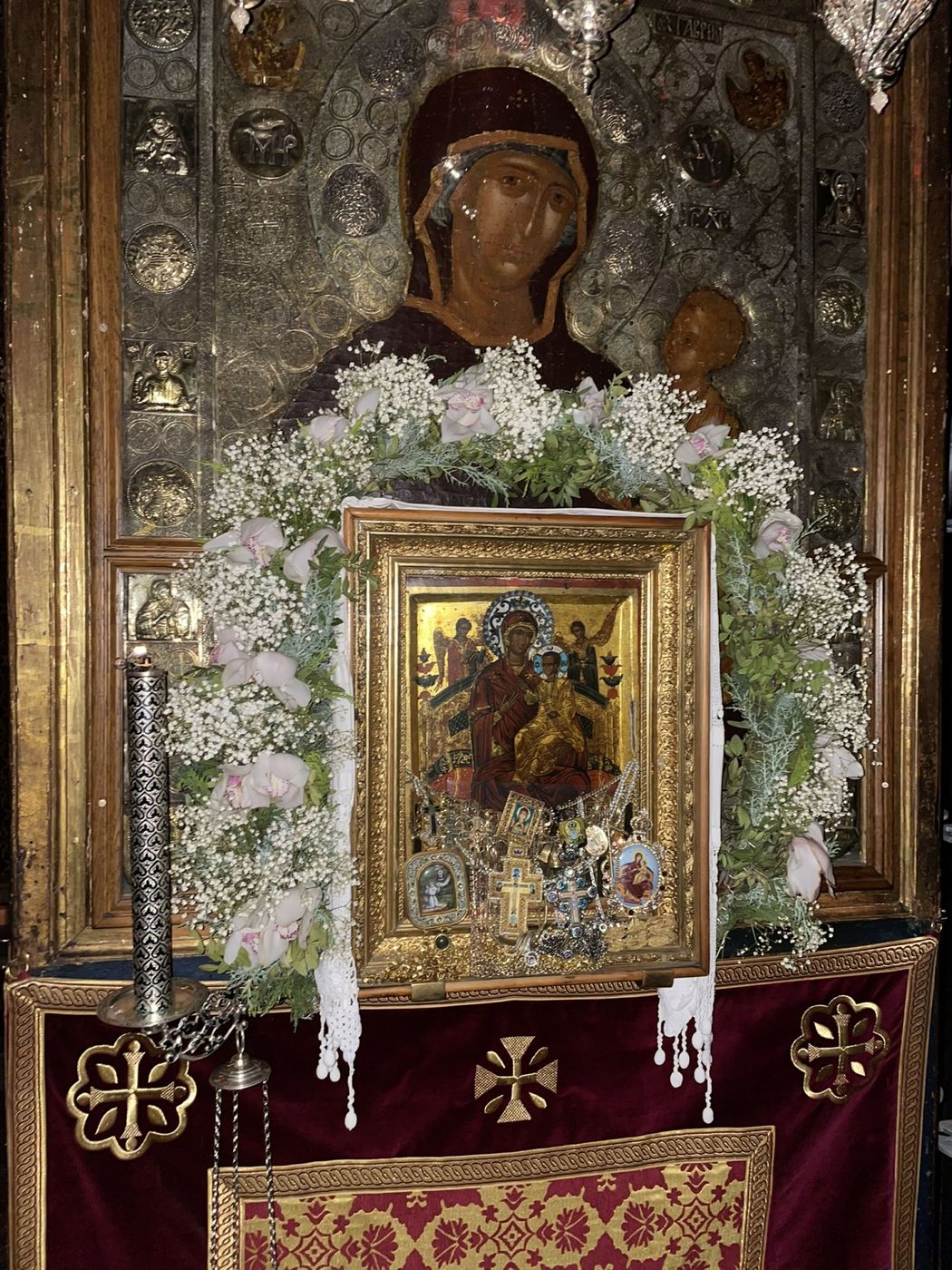
Vatopedi is famous above all for the Holy Belt (Timia Zoni) of the Virgin Mary, one of the few relics associated with the Mother of God, which draws pilgrims from across the world. The monastery also keeps several wonderworking icons of the Theotokos, including the Panagia Vimatarissa and the Panagia Pantanassa.
A monastery like a town
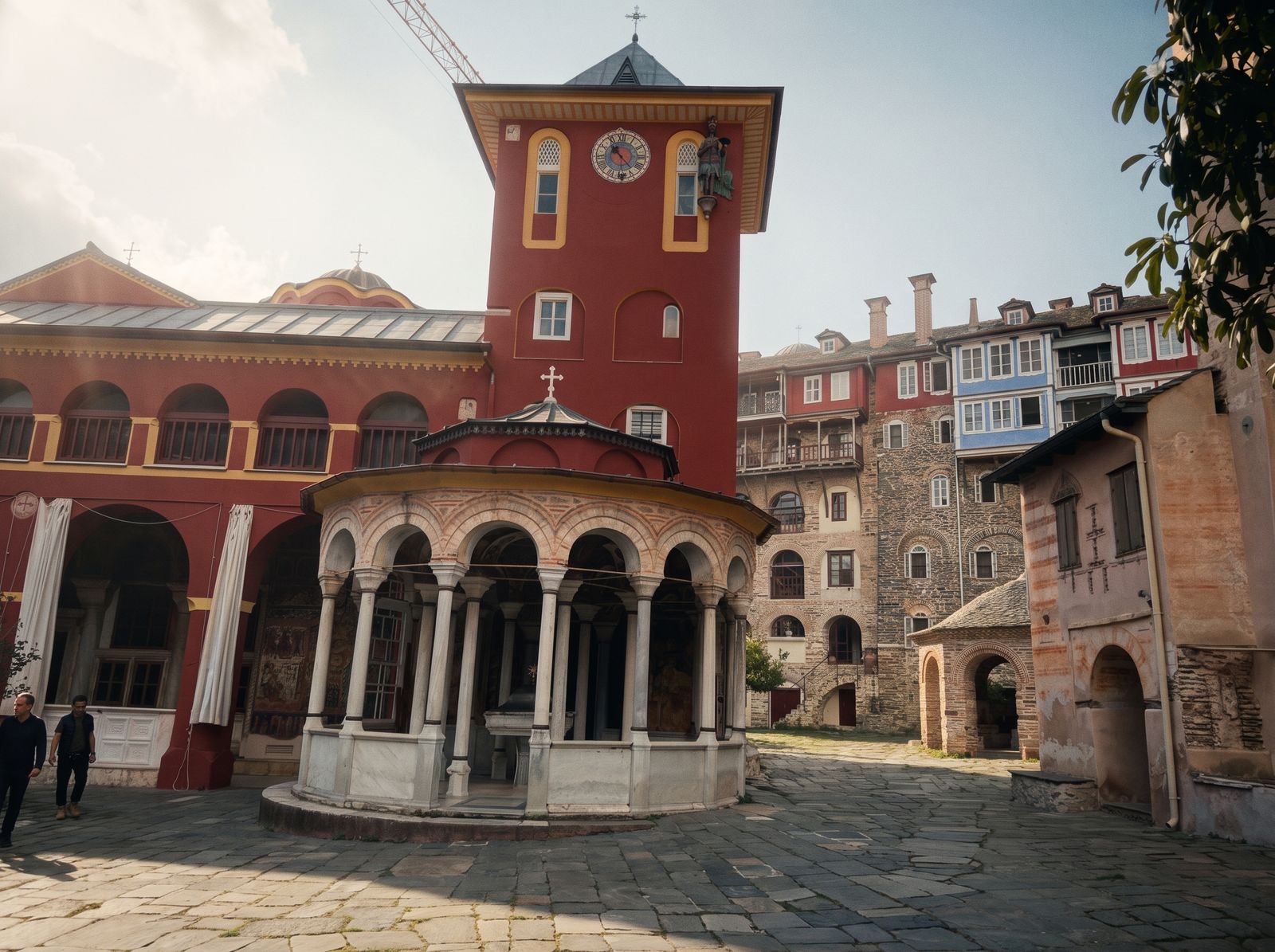
Behind its walls Vatopedi functions almost as a self-contained settlement: multiple churches, a library of priceless manuscripts, workshops and a brotherhood large enough to keep the full cycle of services running day and night. It has been a centre of learning on Athos for a thousand years.
In the series
The second journey of the documentary passes through Vatopedi on the way from Karyes, the administrative capital, toward the Serbian monastery of Hilandar.
Frequently asked questions
What is Vatopedi monastery known for?
It keeps the Holy Belt of the Virgin Mary and several wonderworking icons of the Theotokos, and is one of the largest and oldest monasteries on Mount Athos.
How old is Vatopedi?
It was founded in the late 10th century and is ranked second among the twenty ruling monasteries of Athos.
Where is Vatopedi on Mount Athos?
On the north-east coast of the Athos peninsula, above its own small harbour.