Simonopetra: The Monastery on the Rock
No photograph quite prepares you for Simonopetra. It stands on a single pillar of rock, seven and eight storeys of stone and timber hanging over a drop to the sea — one of the boldest buildings in the Orthodox world.
Founded: 13th century · Dedicated to: The Nativity of Christ
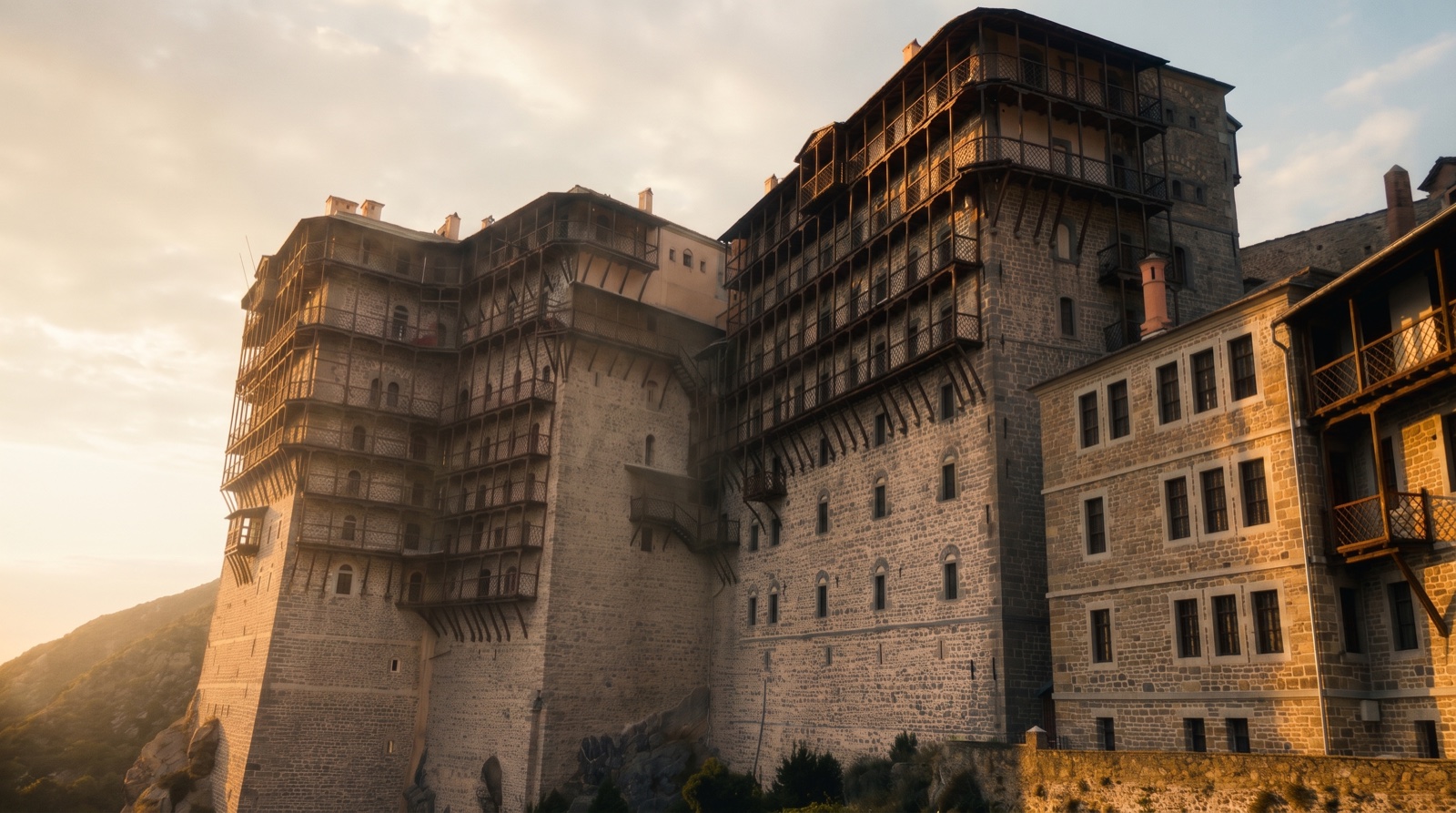
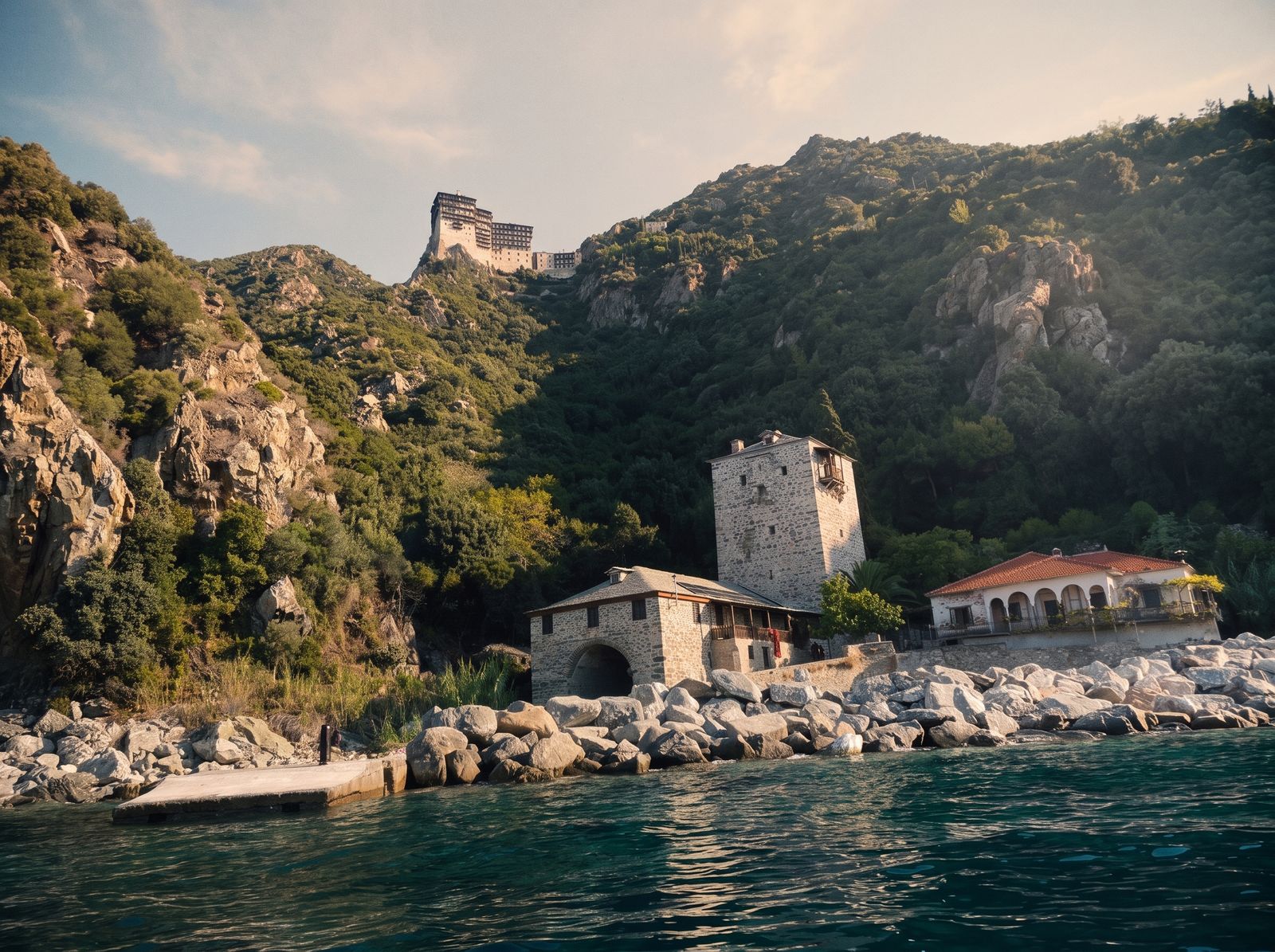
Simonopetra — 'Simon's Rock' — sits on the south-west coast of the Athos peninsula, built onto the top of a near-vertical crag some 230 metres above the Aegean. From a distance it looks less like a monastery than a fortress that grew out of the stone itself.
The founding
Tradition places its founding in the 13th century by Saint Simon the Myrrh-bearer, who, the story goes, was led to build on this impossible spot by a light he saw on the rock at Christmas. The monastery is dedicated to the Nativity of Christ. Fire destroyed it more than once over the centuries; each time it was rebuilt on the same knife-edge of rock.
The wooden balconies
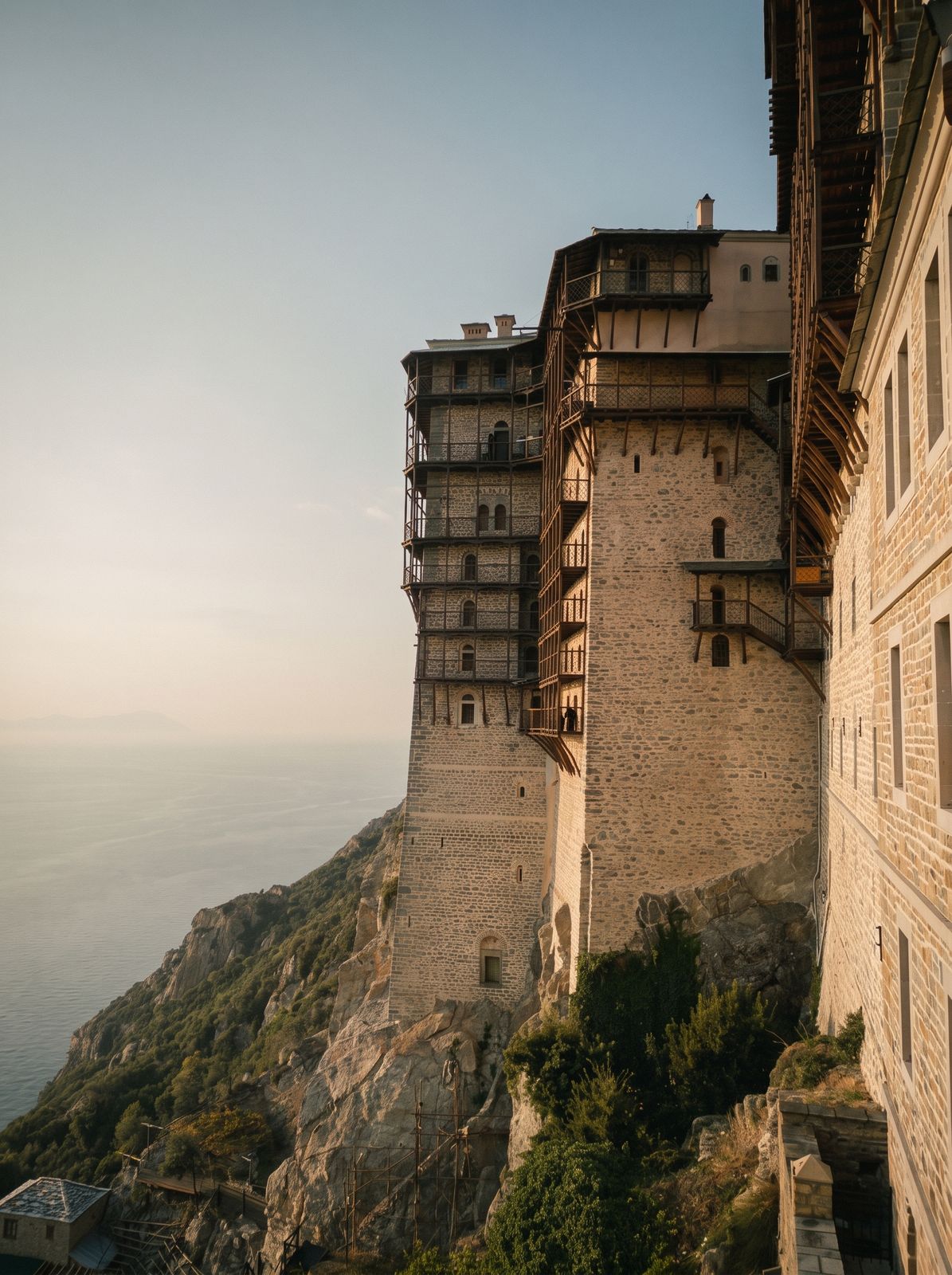
What makes Simonopetra unmistakable are the open wooden galleries — the 'xylovrachionia' — that ring the upper floors and overhang the void. Monks walk them daily with the sea directly below. They are the detail every visitor remembers and the hardest thing to film without vertigo.
Today
Simonopetra is a cenobitic monastery with a large, international brotherhood and is especially known on Athos for its choir and its Byzantine chanting. In the documentary series, it is the gateway to the fourth journey — the walk from Simonopetra on toward Nea Skiti.
Frequently asked questions
Where is Simonopetra monastery?
On the south-west coast of the Mount Athos peninsula in northern Greece, built on a sheer rock about 230 m above the Aegean Sea.
Why is Simonopetra built on a cliff?
Tradition says Saint Simon the Myrrh-bearer was guided by a light on the rock at Christmas and built there despite the danger; the monastery is dedicated to the Nativity of Christ.
Can you visit Simonopetra?
Male pilgrims can visit Mount Athos with a diamonitirion permit. Women cannot enter the peninsula because of the Avaton.