The Hermits: the Edge of the World at Karoulia
There is a point on Athos where the monasteries end and the bare precipice begins. There, hanging literally above the sea, live the hermits — alone, silent, with next to nothing.
The hermits · Karoulia · Katounakia
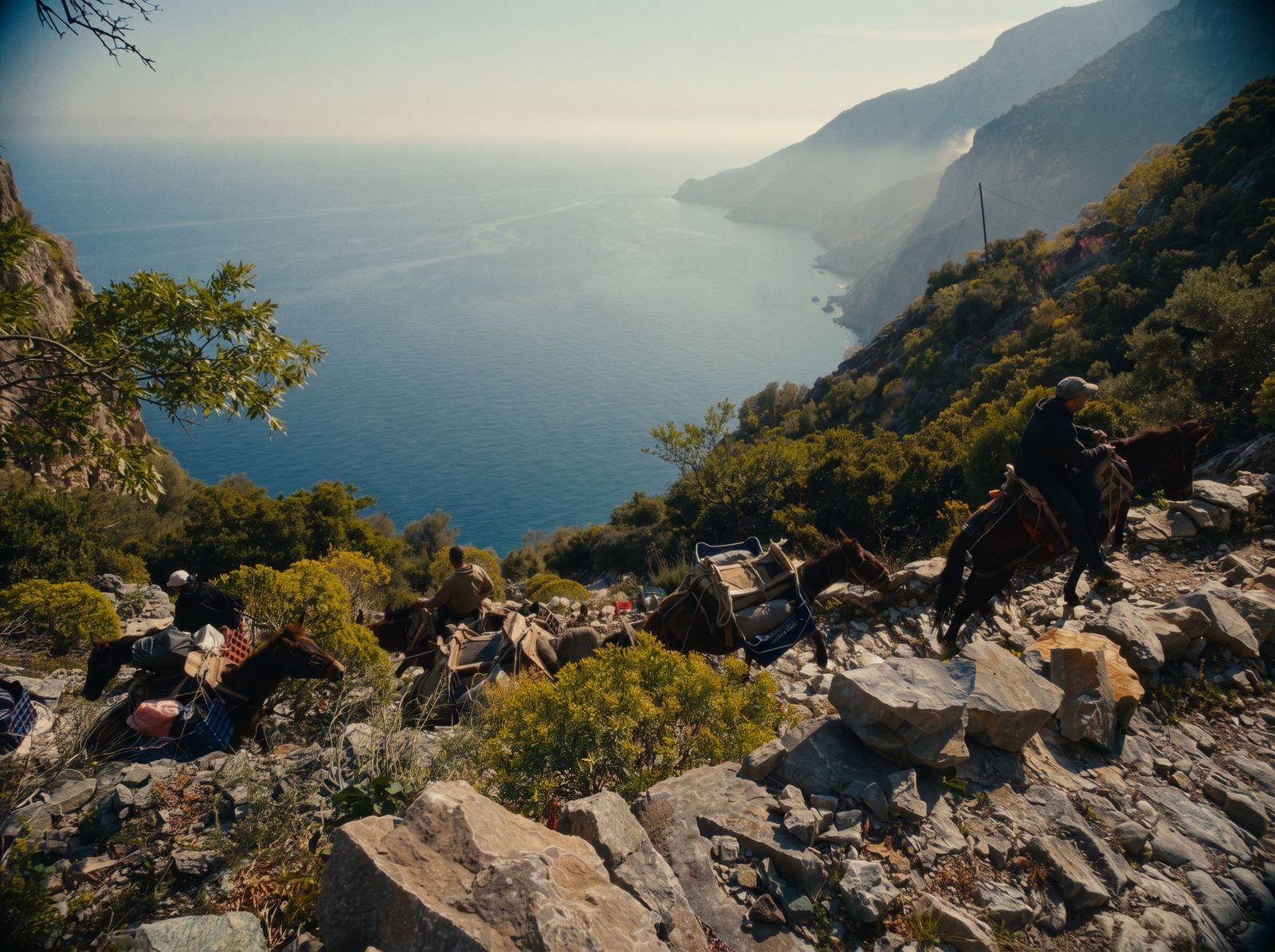
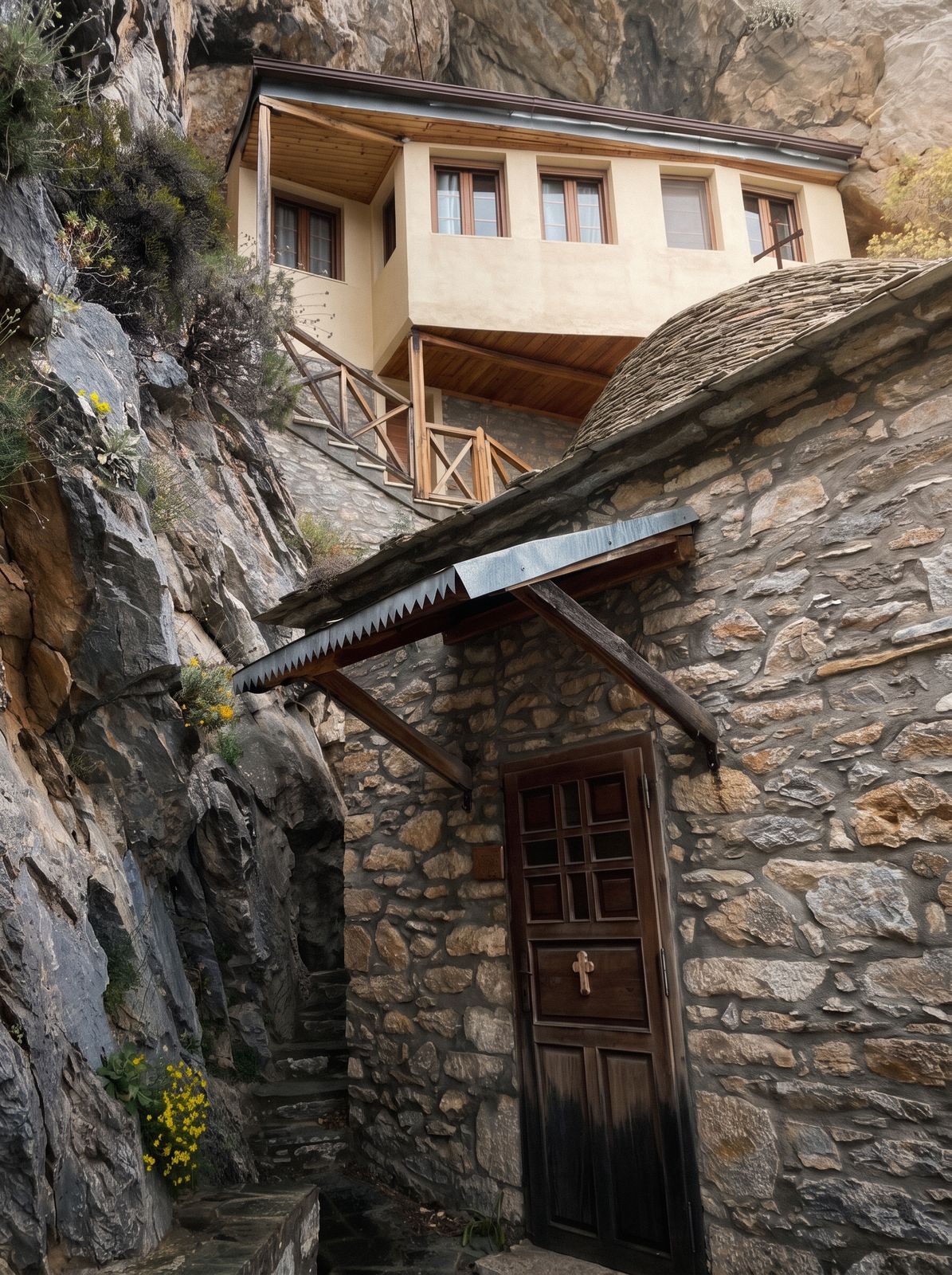
Karoulia and Katounakia are the southern, sheer edge of the peninsula. Here there are no great monasteries with courtyards and bell towers. There are huts clinging to the rock, ropes, chains and wooden ladders — the only "paths" to certain cells.
Why They Chose the Wilderness
The hermit doesn't leave other people because he hates them. He leaves to be alone with prayer, with nothing to distract him. It is the strictest form of monastic life: a little bread, a little water, a great deal of silence.
Life on the Rock
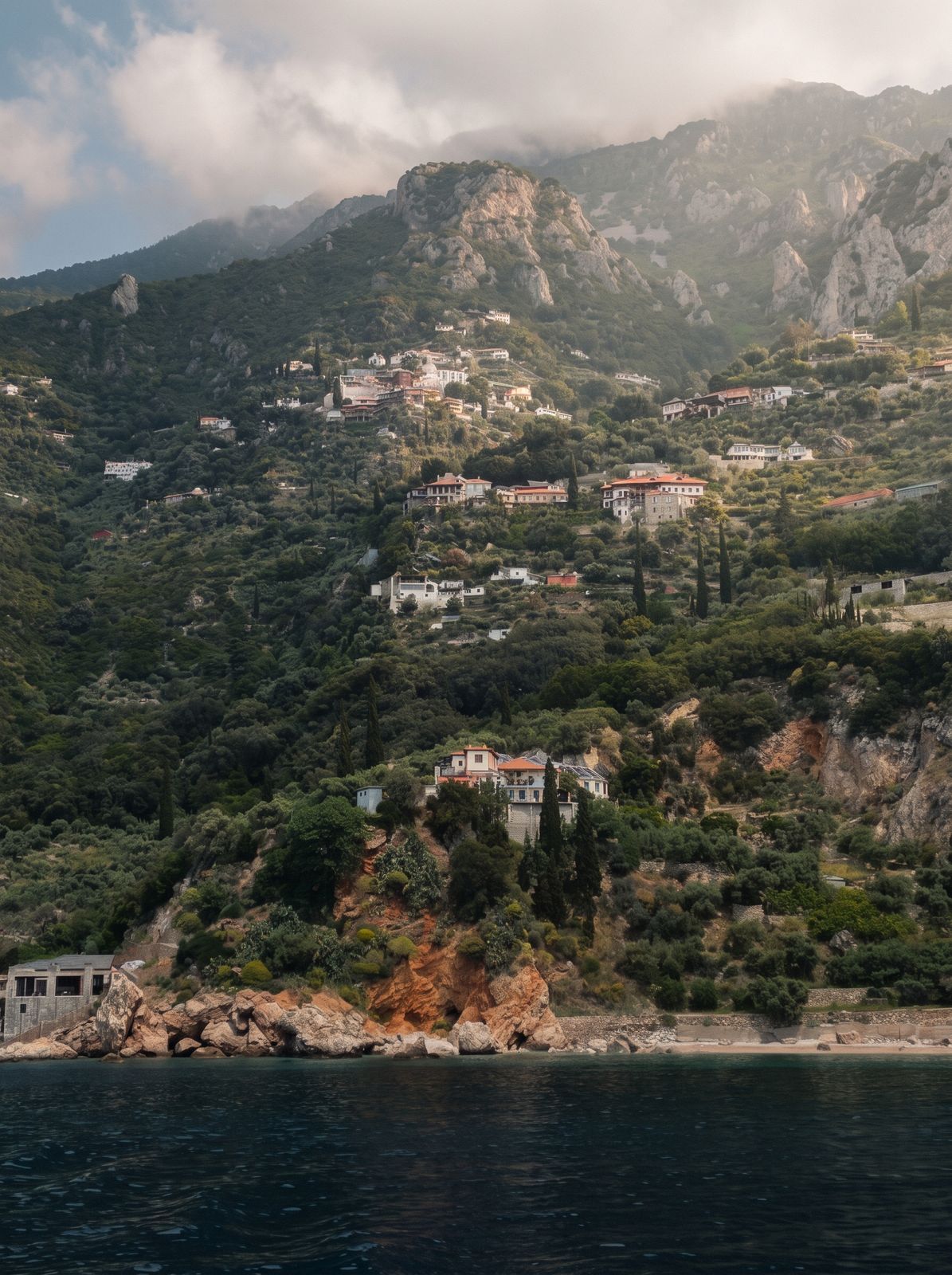
They carry their water or gather it from the rain. The few things they need they haul up by rope from the sea. Some spend decades this way, with nothing to look at but the boundless Aegean.
Why It Moves Us
In a world that never stops, the image of a man who has consciously chosen nothingness is at once shocking and reassuring. That is why the episode with the hermits became, in no time at all, one of the most beloved of the series.
The sixth part enters Karoulia and Katounakia and sits beside these men — without haste, without theatrics. Just one man and one camera, and their silence.
Frequently asked questions
What is Karoulia on Mount Athos?
The steepest, southernmost edge of the Athos peninsula, where hermits live in huts clinging to the cliffs above the sea — the most austere place of asceticism on the Holy Mountain.
Where is Katounakia?
At the southern tip of the peninsula, near Karoulia. Saint Ephraim of Katounakia, an emblematic figure of modern Athonite monasticism, practised asceticism there.
How do the hermits of Athos live?
Alone or in small brotherhoods, through prayer, fasting and handiwork, in the most remote and inaccessible parts of Mount Athos.