Saint Paisios and the Panagouda
Few names move people as deeply as that of Saint Paisios. On Mount Athos, his cell — the Panagouda — remains one of the most beloved places of pilgrimage.
Saint Paisios · Panagouda
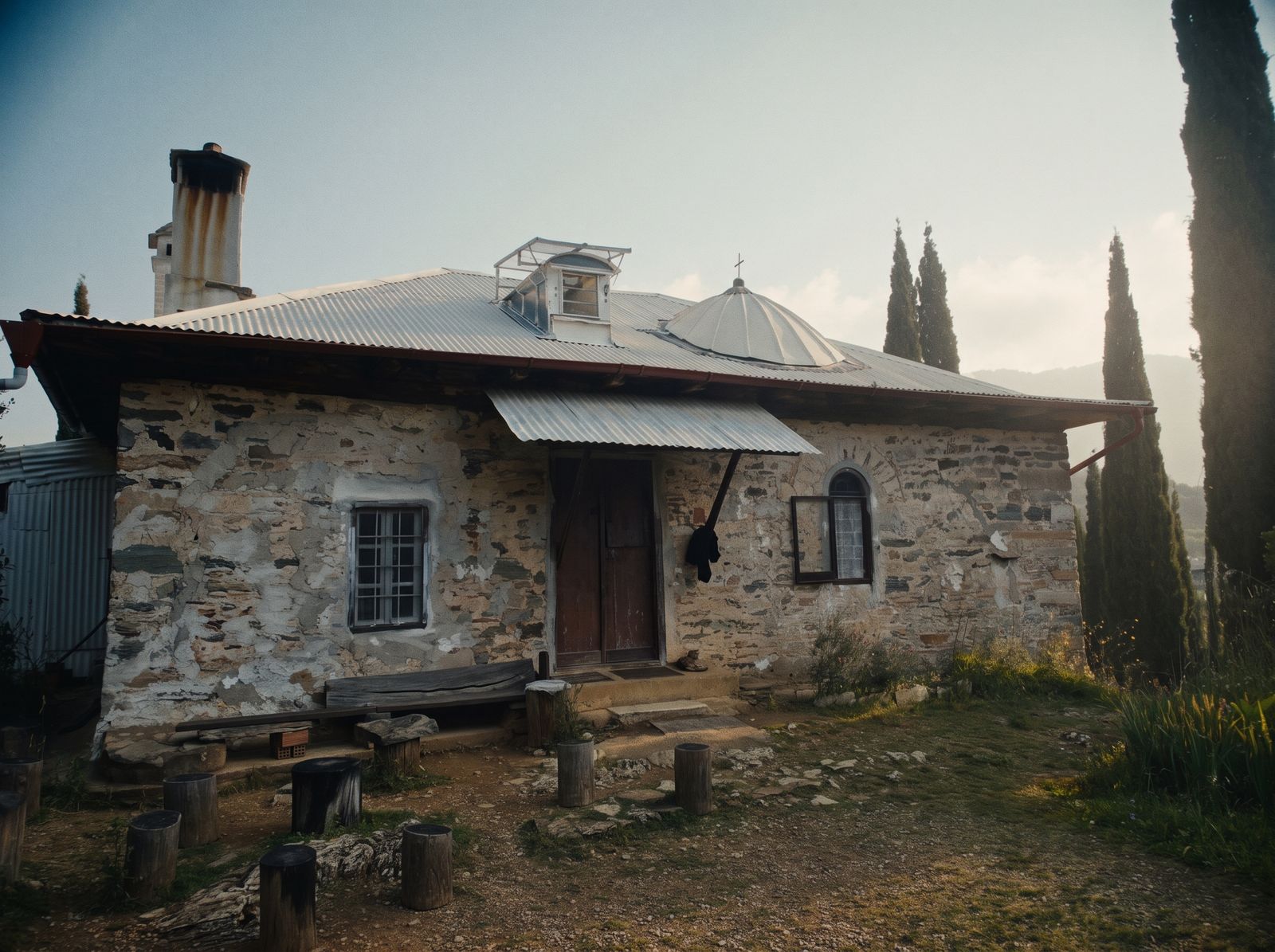
Saint Paisios the Athonite spent the greater part of his monastic life on Athos. In 2015 he was proclaimed a saint by the Ecumenical Patriarchate — and since then the devotion of ordinary people towards him has never stopped growing.
The Panagouda
The Panagouda is the cell where Elder Paisios lived and received people, in the area near the Monastery of Koutloumousiou. There, at his door, people came every day from all over the world — for a word, a blessing, a comfort.
Why People Love Him
Paisios's words were simple, practical, full of humour and love. He didn't speak "from on high"; he spoke about the things that weigh on everyday people — fear, pain, family, faith. That is why his words are still read today as though they were addressed to each one of us.
A Living Place, Not a Museum
The Panagouda is not a museum. It is a living cell, set in the nature of Athos, that keeps the atmosphere of simplicity in which the Saint lived.
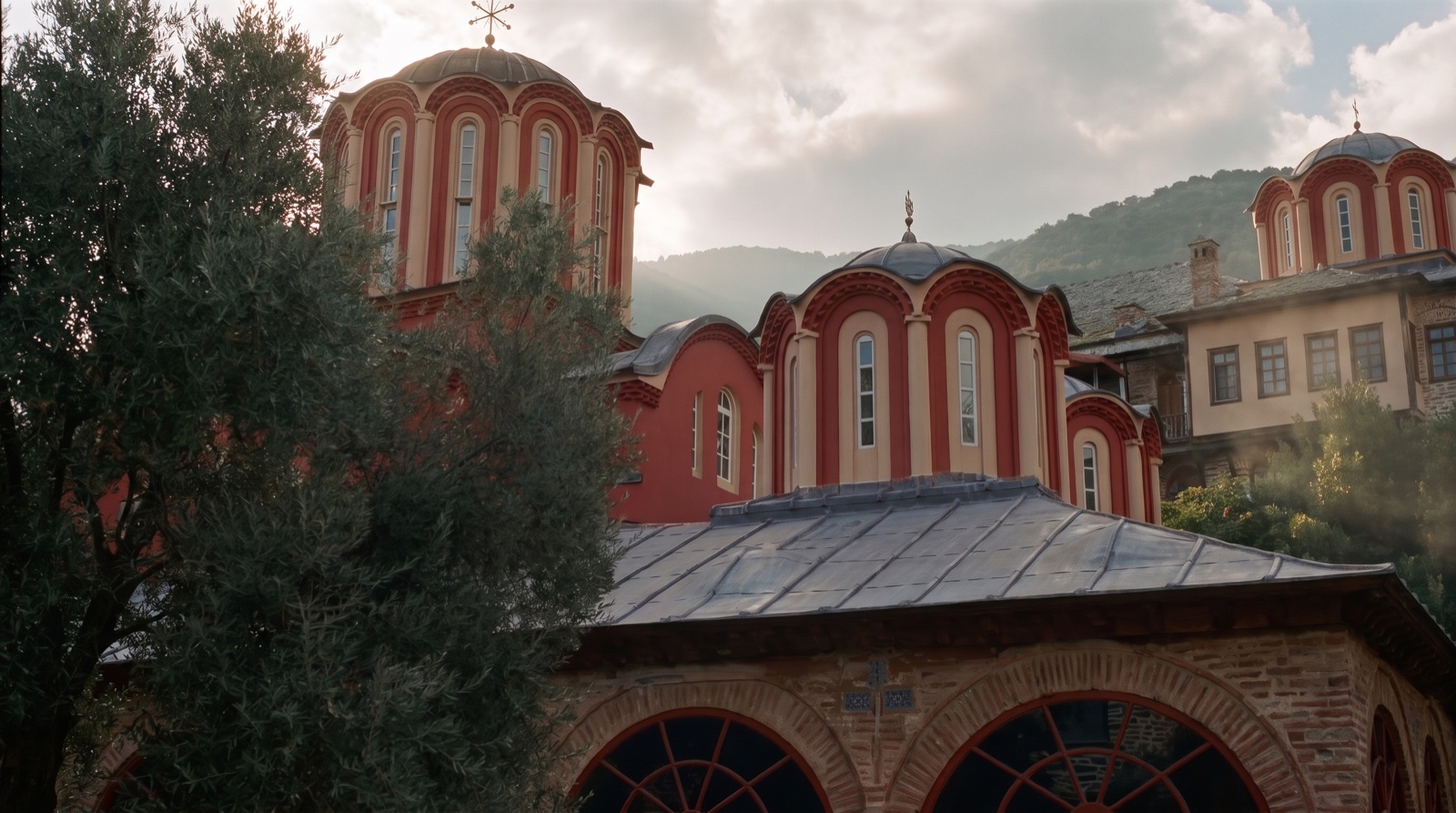
The fourth part of the series — from Simonopetra to Nea Skiti — passes through the Panagouda too, there where the memory of Saint Paisios is still alive in the faces of the monks.
Frequently asked questions
Who was Saint Paisios of Mount Athos?
A monk of Mount Athos (1924–1994), originally from Farasa in Cappadocia, known for his discernment, love and gift of foresight. He was canonised in 2015 by the Ecumenical Patriarchate.
Where is the Panagouda?
The Panagouda cell belongs to Koutloumousiou Monastery, near Karyes. Saint Paisios lived and practised asceticism there from 1979 until 1993.
Can you visit the Panagouda?
Yes — it is a place of pilgrimage for thousands. Access is on foot from Karyes, with the diamonitirion permit for Mount Athos (men only).