What Is Mount Athos
Within Greece, yet with its own laws, its own calendar and its own sense of time, lies a thousand-year-old monastic state. This is Mount Athos.
Introduction · 20 monasteries
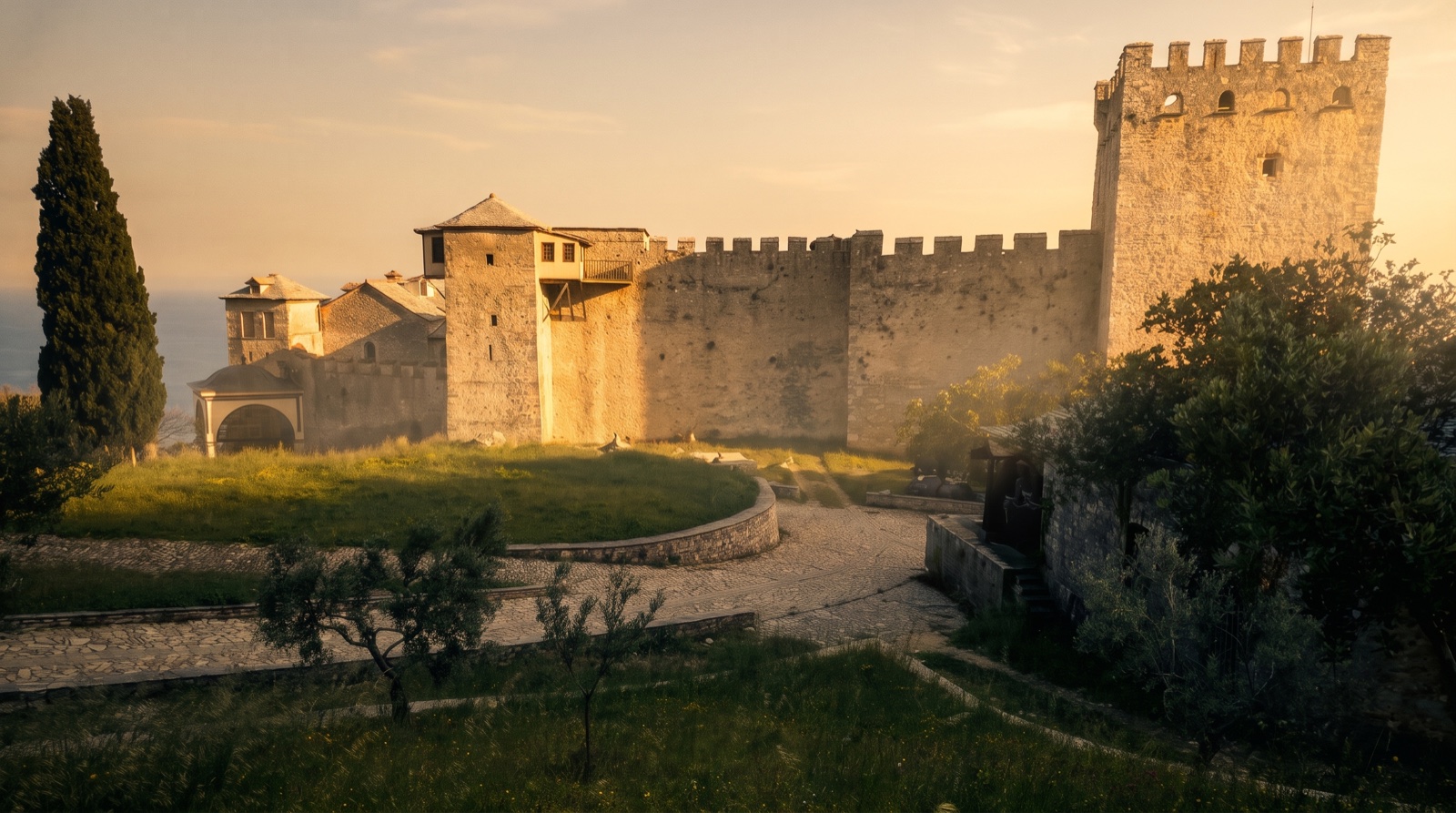
Mount Athos sits on the third "leg" of Halkidiki, on the Athos peninsula. It is the oldest monastic centre of Orthodoxy still in continuous operation, for more than a thousand years now.
The 20 Monasteries
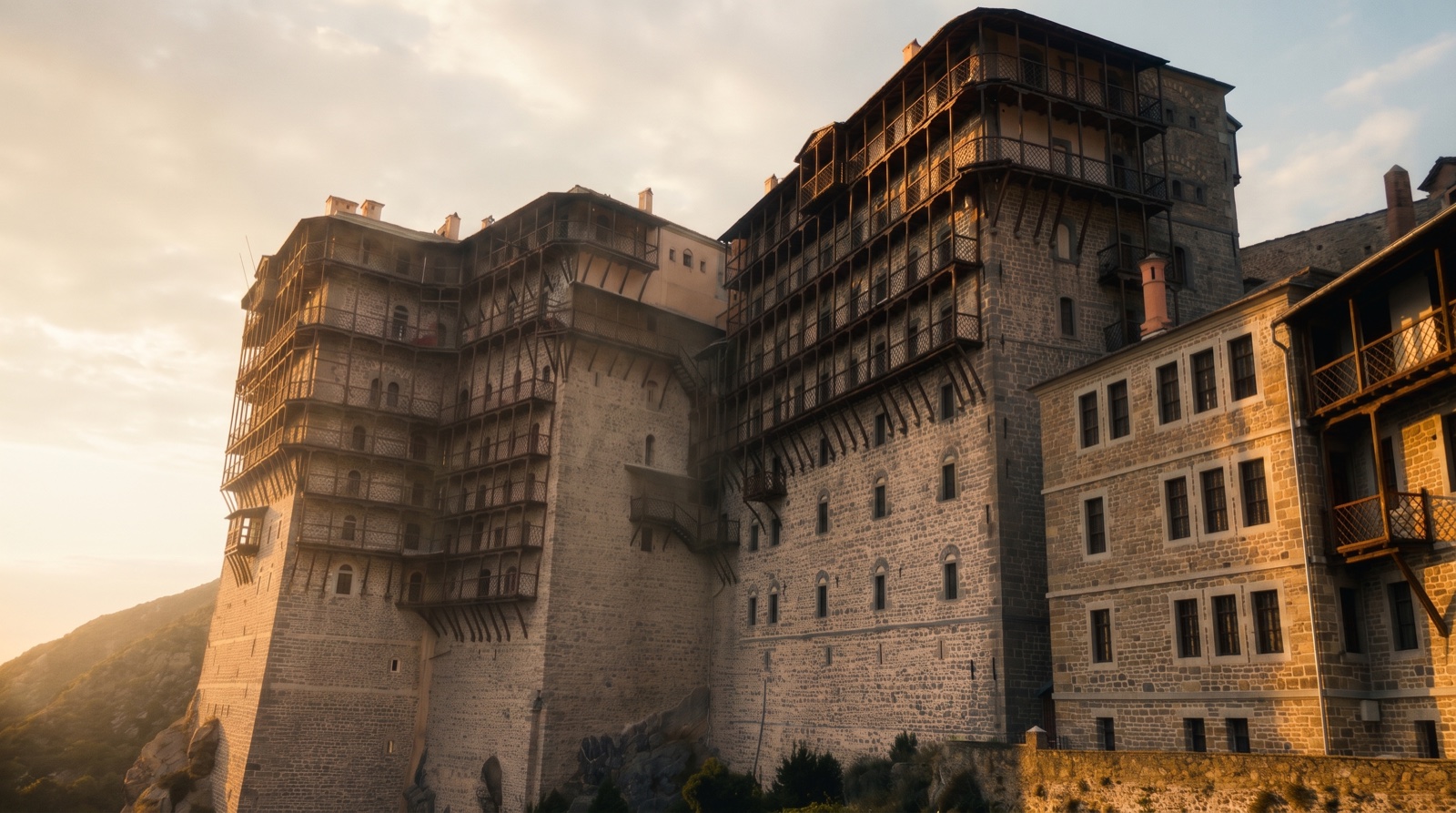
The state is made up of 20 sovereign monasteries, with the Great Lavra first in rank. Around and among them lie sketes, cells, huts and hermitages — from the great communal monasteries to the solitary hermit on the rock. The administrative centre is Karyes.
A State With Its Own Status
Mount Athos is part of Greece, yet it enjoys a self-governing status enshrined even in the Constitution. It has its own charter, is governed by the Holy Community, and to a large extent still follows the old (Julian) calendar — which is why time there "moves" differently.
The Avaton
Its most famous rule is the Avaton: entry is permitted only to men, and only with a special permit. No woman enters — a thousand-year-old tradition, bound up with the "Garden of the Virgin".
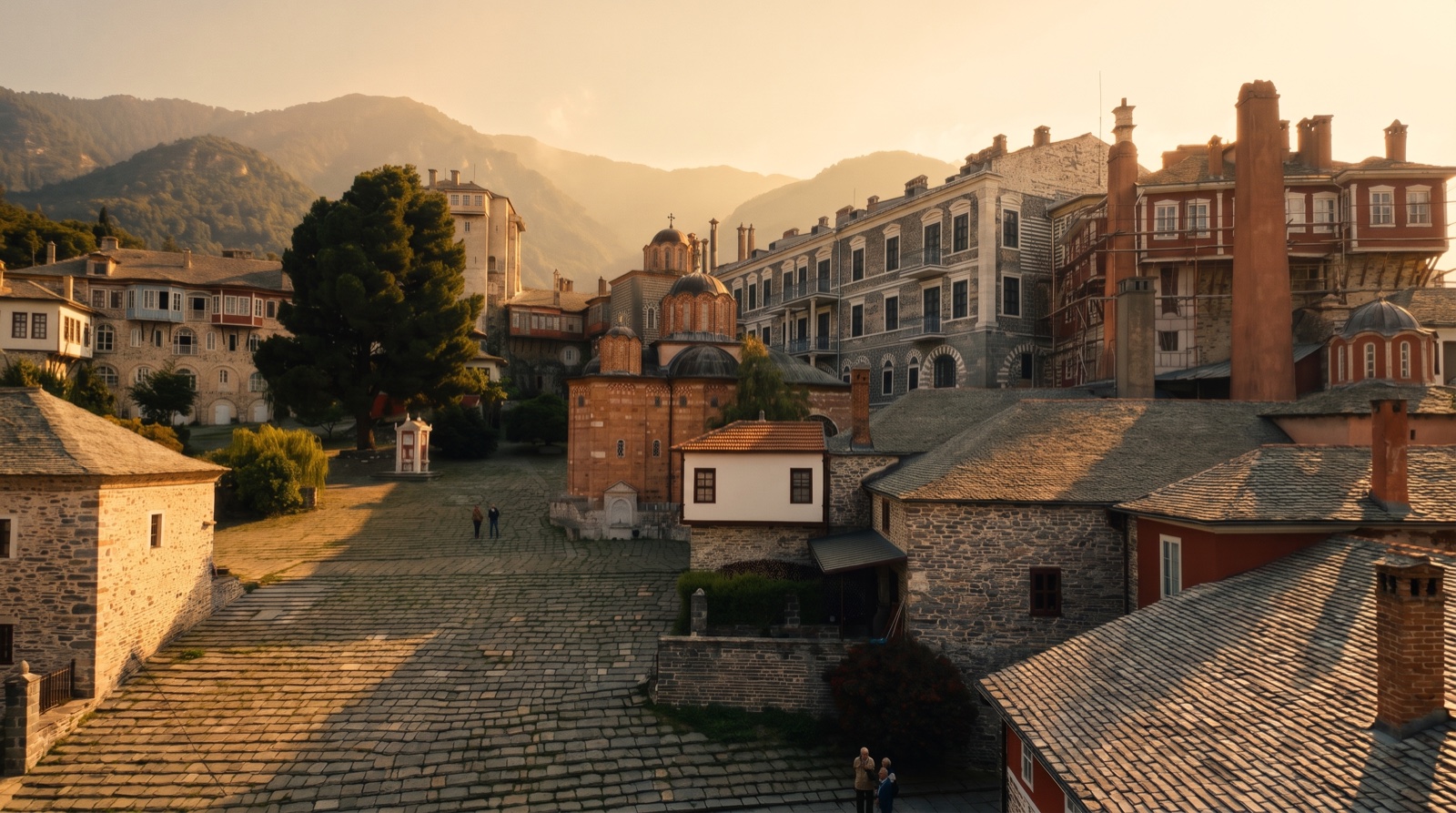
A Living Place, Not a Museum
Above all, Athos is not a sight to visit. It is a place where hundreds of monks live, work and pray today, exactly as they have for centuries. It is this living place that the series "On the Paths of Mount Athos" tries to show — a travelogue monastery by monastery, face by face.
Frequently asked questions
What is Mount Athos?
A self-governing monastic state on the Athos peninsula in Halkidiki, Greece, with 20 ruling monasteries, under the spiritual jurisdiction of the Ecumenical Patriarchate.
How many monasteries are on Mount Athos?
Twenty ruling monasteries, plus sketes, cells, huts and hermitages where monks live.